Wallpapers for N-Series phones[240х320 N81,N73m,N95]


wallpapers for 240х320....For the newer N-Series phones like N81 N73m N95 and many more....there are total 88 wallpapers.

http://depositfiles.com/files/2361686
المزيد

18 Themes for 9.1 os[N73,N85,N81,N76....]


18 Themes for 9.1 os [N73,N85,N81,N76....]

http://depositfiles.com/files/2436780
المزيد

Review of Nokia N81/Nokia N81 8Gb


Sales package:
Nokia N81 8GB
Wired stereo-headset (HS-45) with remote control (AD-54)
USB data cable (CA-101)
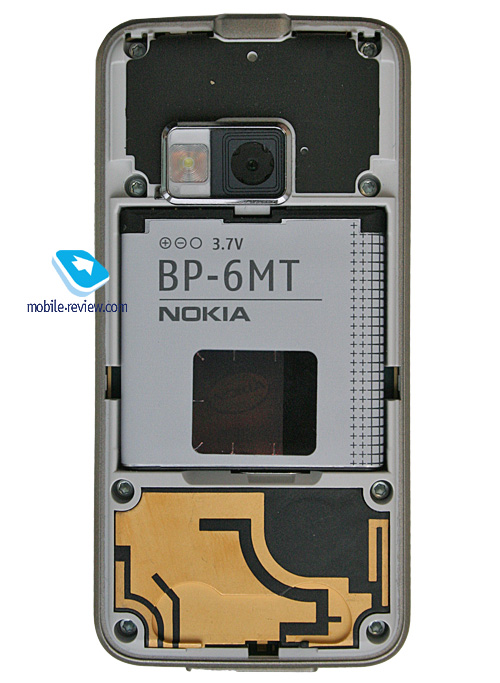
Battery (BP-6MT)
Charger (AC-5)
Positioning

For Nokia the release of the Nokia N81 is a hallmark event in that it is one of the first handset to support its re-launched N-Gage platform. On top of that, within the Nokia’s range this model is about to claim the position of the most affordable multimedia convergent device marrying music, games and imaging under its hood. So as not to pose a threat to the Nokia N95 and the Nokia N95 8 Gb, this device comes with no GPS receiver onboard, but the N81 still ships with local maps, sort of reminding its users that a Nokia-branded external receiver is always up for grabs.

The Nseries line-up is now seeing a very an amusing differentiation of its members. Nokia tries to take some devices to the mass-market using quaint designs and pushy advertising campaigns, like those of the Nokia N76. Another part of its offerings, on the contrary, is jam-packed with features, so as to meet the requirements of the users who put some thought into choosing their new phones and normally have functionality on the top of their priority lists. However even the latter camp has own sub-classes: basic editions and pumped-up versions. The example of the Nokia N95 and Nokia N95 8 Gb shows that the memory volume is not the only thing setting them apart – the 8 Gb’s RAM volume has been modified as well. So it is more of a polished variant of the model with most letdowns of the original handset done away with. Nevertheless, the Nokia N81 stands just outside the latter camp – both version of this phone share the same hardware and are pretty much identical in terms of the materials used, and moreover, they hit the market on the same day.

This product’s target audience is the youth, with 22-30 year old male being its primary focus, while girls and older consumers have been given short shrift. What the company is banking on with the N81 is its gaming department, while other fronts and smarts are not as important. In a certain sense this model is the first go at this field, that starts shipping long before its major constituent, the N-Gage service and N-Gage Arena come along.

Since the N81 was designed with the youth in mind, it’s no wonder why it sports such curves and materials. They tried to make it both no-nonsense and flashy at the same time, and in some ways they succeeded.

Even before the Nokia N81’s official release date, it turned up in the middle of a scandal. First, Orange proclaimed it was not adding this device to its portfolio, since Nokia’s latest and greatest offspring shipped with bundled access to Nokia Music Store. Essentially, this service was a direct rival for this carrier’s own music shop. “3”, a British operator, followed in the footsteps of Orange shortly. However, Vodafone didn’t announce it was going to dump the N81, yet noted that it would never give it an aggressive advertising campaign for the very same reason. If you skim through all write-ups on this issue, it feels like this matter is extremely crucial for Nokia, and threatens its value-added services altogether. However it couldn’t be further from the truth in this case.

Mind the fact that carriers have been retailing the Nokia N95 armed with Nokia Music Store access as well and what a wild success it is. It appears this “forgetfulness” of carriers applies only to a number of select products. We won’t make guesses about why it is so, since the only thing that matter is that the N81 will be widely available on all markets, even though not in the guise of a carrier-branded device.


Display

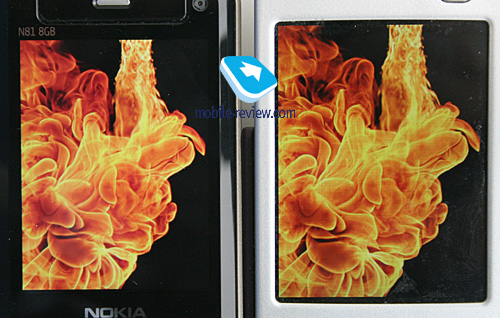
The N81’s display shows up to 16 million colors (TFT), sports QVGA-resolution (240x320 pixels, 37x49 mm, 2.4 inches from corner to corner). It accommodates up to 12 text lines and 3 services lines, whereas in the web-browser mode you can easily cram up to 20-22 lines into it. The display quality is fine; we found the picture quite vibrant and easy-to-read in the sun.


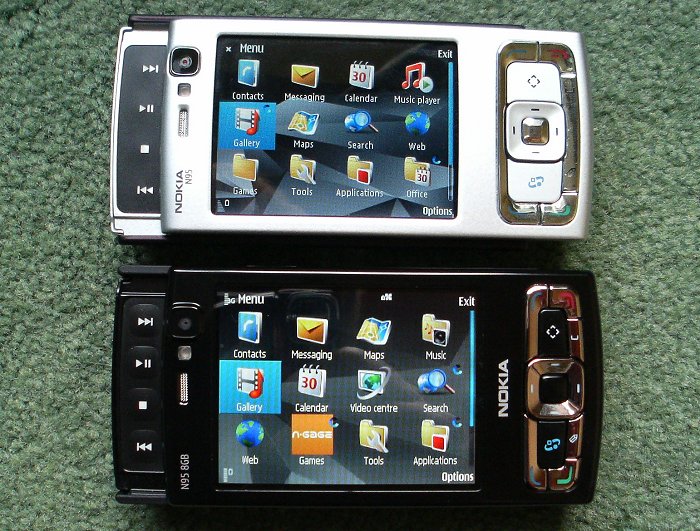
Putting the N81 up against the Nokia N95 8 Gb, it’s easy to notice the latter trumps it with its larger diagonal (2,8 inches), yet falls flat when it comes to color reproduction.


Keypad

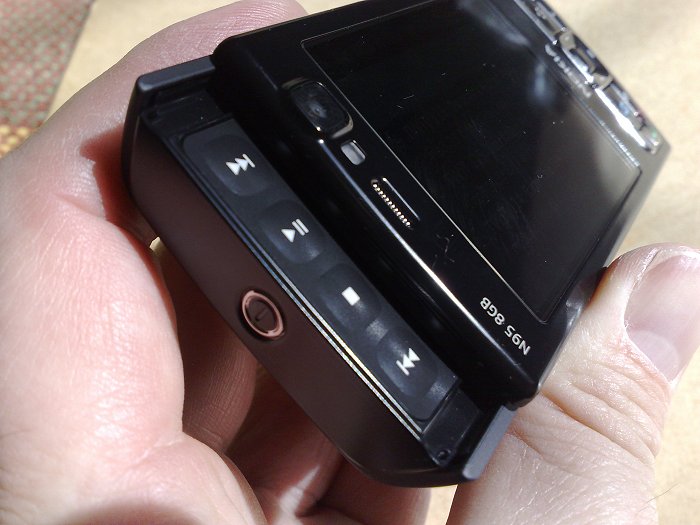
The Nokia N81’s foremost innovation is its touch-sensitive keypad; however Nokia’s approach to this is quite different from what we have come to expect. The only touch-sensitive thing about the N81 is its navigation cluster that sits on top of the upper slide. Thanks to its flat surfaces, the phone looks pretty quaint, but here is the number-one question – what about tactile feedback, for consumers generally like to feel every press they make? Unlike Samsung, where they couldn’t solve this issue for a very long while in any acceptable way, here Nokia employs a combined mechanism. You do feel how the buttons go down, even though all these presses are handled by touch-sensitive sensors (for music controls only). Technically, this is a cross between two worlds, and what’s especially good about it is that it won’t work without you actually pushing a key down, so this reduces the possibility of accidental clicks.

With the Nokia N81 the maker revives the already-forgotten name – “Navy Wheel” – yet puts a whole new meaning and purpose in it. This is a smallish mechanical button with its edges sitting slightly above the surface. Honestly, I didn’t find it a joy to use. It is also flanked by music controls, which is the same control cluster you will see on the N81’s remote. But that’s not the most interesting thing about it. The fact of the matter is that it is the first occasion when a Nokia-branded device utilizes touch-based navigation, so you can scroll though your gallery and music library by sweeping your finger around the navigation button (direction doesn’t matter – if it’s clockwise, then you’ll be scrolling down). Nevertheless, it is not an essential or vital touch, that’s why by default it is disabled in the menu, which is the right thing. I bet there will be a bunch of young people assuring me that this touch-based scrolling ability is really big. We won’t argue with them, and will rather note that with other actions being unavailable with this touch-sensitive control element, this is more of a first go at this type for Nokia. For instance, the Samsung F500’s touch-based interface is much more enticing.


Battery

The N81 has a rated battery life of 4 hours of talk time and up to 410 hours of standby. For Nokia N95, the standby time was rated at 240 hours. While both figures are good, the Nokia N81 does last longer if you are not heavy on its feature pack. However, with similar usage scenarios the battery life numbers for either of the devices won’t stand too far apart – it is all about the display and the radio module power consumption.

It takes the N81 a tad longer than 2 hours to charge from empty to full.

Below is the chart of top times we squeezed out of the N81 in various modes:
GPS-navigation (external Bluetooth-receiver) – 7 hours
Video – 4 hours (5-6 hours claimed)
WEB-surfing (EDGE) – 3 hours
Wi-Fi (non-stop data upload) – 3 hours
Music in headphones – 10.5 hours (11.5 hours claimed)
Games – 5 hours (6 hours clamed)

The numbers we got are pretty much in keeping with the official ratings, and the fact we got only 10,5 hours of music is probably because we used the top volume level, which is quite painful, and very few will go for it.

In Moscow, the N81 stayed online for around 2 days when we were heavy on its features (regular mail checks, up to 5 hours of music and up to 20 SMS messages). We are confident the phone will easily last 2 days even in the most extreme usage mode (except for non-stop web-browsing), and if you are planning to use nothing but its voice calls, then expect 3-4 days of operation, depending on how much time you spend on the phone.


Memory, memory card

In fact, the Nokia N81 and the Nokia N81 8 Gb are set apart only by the memory expansion slot, which is available with the former (up to 4 Gb as of today, it will also handle bigger cards as soon as they hit the market), while the latter edition sports bundled flash-based storage.

The phone comes with 128 Mb NAND-memory, utilized for storage of the operating system and user data. A brand-new device will offers its user roughly 25 Mb of free space (Disk C), whereas the Nokia N81 8 Gb’s flash memory comes as Disk E and has 7672 Mb available.

The two editions are no different in terms of UI speed, on top of that, regardless of what you have, memory card slot of flash storage, they can be accessed from a PC equally fast.

The RAM size makes 96 Mb (SDRAM), and right after turning the device on for the first time, you will have around 42 Mb available for your applications. This RAM volume doesn’t seem to be optimal – for instance, the Nokia N95 8 Gb comes with 128 Mb of RAM onboard. For the most part, you won’t see sluggishness on the N81’s side, however when managing a couple of windows in the browser, it may come that you will simply run out of memory, the same goes for the gallery.

On the other hand, though, applications are launched pretty fast, and the N81’s memory can hold up to 8-9 “heavy-duty” apps, like games, which you can toggle between with no noticeable freeze-ups. That’s why we’ve come to think that these memory issues are typical only of certain applications, since the N81’s memory management has improved over the previous solutions with comparable specifications.

USB, Bluetooth, Wi-Fi, Infrared

USB. The handset comes in with USB 2.0 support, upon a successful PC connection you can choose one of the following modes:
Data Transfer (Mass Storage USB) – memory cards is available, no drivers required, as your OS identifies the handset automatically. Data transfer speed makes around 950 Kb/s (USB 2.0).
PC Suite – used for device management via Nokia PC Suite, enables all features of the phone, data backup etc.
Image Print – no explanation required.
Media Player (MTP protocol) – synchronizes data with Windows Media Player.

Bluetooth. The smartphone sports EDR-enabled Bluetooth 2.0 alongside the following profiles:
A2DP
AVCRP
BIP-ImagePush
DUN-GW
FT-Server
HandsFree-AG (1.0)
Headset-AG
OBEX
OPP-Client
OPP-Server
SIM Access-Server

The top speed you can get with the N81’s Bluetooth connection is around 100 Kb/s. We also tested its A2DP profile in pair with the Sony Ericsson DS970 headset, which worked just fine – we managed our play list, skipped within tracks and adjusted volume seamlessly, however we couldn’t make current track’s title show up on the N81’s display.

Wi-Fi. This handset comes armed with Wi-Fi (IEEE 802.11 g) support. All security standards are supported: WEP , WPA , WPA 2, with other advanced settings available. The device supports Universal PnP standard (UPnP), which is the successor to the wired standard PnP. With its help, along with Wi-Fi, you can send slides to a TV, music to a stereo system, and photos to a printer. In a certain sense UPnP is like an add-on to the infrastructure (Wi-Fi, for example) in the form of Bluetooth-esque services, so this looks more like a software upgrade. The sales package includes Home Media Server, which allows connecting the N81 through your home Wi-Fi network to a desktop PC.

There is also a Wi-Fi wizard available in the N81 – it can keep looking for enabled networks in the background mode and tap into them

Competition

Both iterations of the Nokia N81 are important for the company – they are its feeler devices that should showcase the N-Gage’s abilities and bring the concept of similar solutions to the mainstream. While other makers don’t even attempt to take their pilot products to the mass-market, Nokia takes advantage of its brand strength for these purposes. However, this very device will never be a wild success. Why?

Nothing out of the ordinary – the handset arrives on the market before the N-Gage service actual launch, and technically offers Nokia’s partners (hundreds of them) a proving ground for new concepts. The company has its hopes centered around the next device- the Nokia N82, which is supposed to become a bestseller and in some ways follow in the footsteps of the Nokia N73 and the Nokia N95. On top of that, its retail price will be somewhat in between the N7x and the N9x series. Curiously, Nokia hasn’t had any enormously successful solutions in this segment lately – all its offerings enjoyed moderate sales. Just remember the Nokia N80, which sparked an avalanche of forum posts and threads, but it never became the king of the sales charts.
Impressions

The reception quality provided by the N81 is up to Nokia’s standard, nothing to worry about here. The volume of ring tones, all thanks to its stereo-speakers, is over the roof, which automatically makes the N81 one of the market’s loudest devices. The vibro alert is not particularly easy to feel due to the phone’s bulky casing.

The 8 Gb edition retails in Europe for 430 Euro, while the junior model will set you back more than 360 Euro – these prices may vary by region, though. At the same time, speaking of the Russian market, the Nokia N81’s memory-card version sells for 600 USD, and its 8 Gb sibling will be yours for 740-800 USD. Obviously, once they have taken all the cream, the prices will be knocked down to the recommended 500 USD and 640 USD respectively, but will take some time, so expect the price cut no earlier than after the New Year.

The N81 is a mixed bag – on the one hand, it is a youth-orientated device with all the essentials of one inside, but it comes with a very mediocre camera and no business-savvy features onboard (applications in the first place, but you can install them manually). Sonic experience-wise, the N81 is quite a decent performer, which is indicated by our RMAA tests; unfortunately the set of headphones it comes packaged with is not as good. Its gaming department is yet to emerge, and when the N-Gage service will go online the Nokia N81 will one of a slew of offerings with knack for games.

In some ways, this handset reminds me of the Nokia 3250 – similarly positioned towards the youth, quite moderate sales (‘one million units sold’ was Nokia’s PR, nothing more to it – other models were selling better back then). This phone lacks charisma to become a bestseller with its design alone, and its feature pack is not as fantastic as they claim. On balance, it is an average solution, that can’t make our mouths watering, or make us throw it back into the box – it is somewhat between these two extremes. This means the N81 scores a “B” and if you are not expecting it do somersaults, you will be quite content with it.

SAR for the Nokia N81 8 Gb – 0.96 W/kg, for Nokia N81 – 0.81 W/kg.

Sources....mobile-review.com
المزيد

Review of Nokia N81/Nokia N81 8Gb


Sales package:
Nokia N81 8GB
Wired stereo-headset (HS-45) with remote control (AD-54)
USB data cable (CA-101)
Battery (BP-6MT)
Charger (AC-5)
Positioning

For Nokia the release of the Nokia N81 is a hallmark event in that it is one of the first handset to support its re-launched N-Gage platform. On top of that, within the Nokia’s range this model is about to claim the position of the most affordable multimedia convergent device marrying music, games and imaging under its hood. So as not to pose a threat to the Nokia N95 and the Nokia N95 8 Gb, this device comes with no GPS receiver onboard, but the N81 still ships with local maps, sort of reminding its users that a Nokia-branded external receiver is always up for grabs.

The Nseries line-up is now seeing a very an amusing differentiation of its members. Nokia tries to take some devices to the mass-market using quaint designs and pushy advertising campaigns, like those of the Nokia N76. Another part of its offerings, on the contrary, is jam-packed with features, so as to meet the requirements of the users who put some thought into choosing their new phones and normally have functionality on the top of their priority lists. However even the latter camp has own sub-classes: basic editions and pumped-up versions. The example of the Nokia N95 and Nokia N95 8 Gb shows that the memory volume is not the only thing setting them apart – the 8 Gb’s RAM volume has been modified as well. So it is more of a polished variant of the model with most letdowns of the original handset done away with. Nevertheless, the Nokia N81 stands just outside the latter camp – both version of this phone share the same hardware and are pretty much identical in terms of the materials used, and moreover, they hit the market on the same day.

This product’s target audience is the youth, with 22-30 year old male being its primary focus, while girls and older consumers have been given short shrift. What the company is banking on with the N81 is its gaming department, while other fronts and smarts are not as important. In a certain sense this model is the first go at this field, that starts shipping long before its major constituent, the N-Gage service and N-Gage Arena come along.

Since the N81 was designed with the youth in mind, it’s no wonder why it sports such curves and materials. They tried to make it both no-nonsense and flashy at the same time, and in some ways they succeeded.

Even before the Nokia N81’s official release date, it turned up in the middle of a scandal. First, Orange proclaimed it was not adding this device to its portfolio, since Nokia’s latest and greatest offspring shipped with bundled access to Nokia Music Store. Essentially, this service was a direct rival for this carrier’s own music shop. “3”, a British operator, followed in the footsteps of Orange shortly. However, Vodafone didn’t announce it was going to dump the N81, yet noted that it would never give it an aggressive advertising campaign for the very same reason. If you skim through all write-ups on this issue, it feels like this matter is extremely crucial for Nokia, and threatens its value-added services altogether. However it couldn’t be further from the truth in this case.

Mind the fact that carriers have been retailing the Nokia N95 armed with Nokia Music Store access as well and what a wild success it is. It appears this “forgetfulness” of carriers applies only to a number of select products. We won’t make guesses about why it is so, since the only thing that matter is that the N81 will be widely available on all markets, even though not in the guise of a carrier-branded device.


Display

The N81’s display shows up to 16 million colors (TFT), sports QVGA-resolution (240x320 pixels, 37x49 mm, 2.4 inches from corner to corner). It accommodates up to 12 text lines and 3 services lines, whereas in the web-browser mode you can easily cram up to 20-22 lines into it. The display quality is fine; we found the picture quite vibrant and easy-to-read in the sun.


Putting the N81 up against the Nokia N95 8 Gb, it’s easy to notice the latter trumps it with its larger diagonal (2,8 inches), yet falls flat when it comes to color reproduction.


Keypad

The Nokia N81’s foremost innovation is its touch-sensitive keypad; however Nokia’s approach to this is quite different from what we have come to expect. The only touch-sensitive thing about the N81 is its navigation cluster that sits on top of the upper slide. Thanks to its flat surfaces, the phone looks pretty quaint, but here is the number-one question – what about tactile feedback, for consumers generally like to feel every press they make? Unlike Samsung, where they couldn’t solve this issue for a very long while in any acceptable way, here Nokia employs a combined mechanism. You do feel how the buttons go down, even though all these presses are handled by touch-sensitive sensors (for music controls only). Technically, this is a cross between two worlds, and what’s especially good about it is that it won’t work without you actually pushing a key down, so this reduces the possibility of accidental clicks.

With the Nokia N81 the maker revives the already-forgotten name – “Navy Wheel” – yet puts a whole new meaning and purpose in it. This is a smallish mechanical button with its edges sitting slightly above the surface. Honestly, I didn’t find it a joy to use. It is also flanked by music controls, which is the same control cluster you will see on the N81’s remote. But that’s not the most interesting thing about it. The fact of the matter is that it is the first occasion when a Nokia-branded device utilizes touch-based navigation, so you can scroll though your gallery and music library by sweeping your finger around the navigation button (direction doesn’t matter – if it’s clockwise, then you’ll be scrolling down). Nevertheless, it is not an essential or vital touch, that’s why by default it is disabled in the menu, which is the right thing. I bet there will be a bunch of young people assuring me that this touch-based scrolling ability is really big. We won’t argue with them, and will rather note that with other actions being unavailable with this touch-sensitive control element, this is more of a first go at this type for Nokia. For instance, the Samsung F500’s touch-based interface is much more enticing.


Battery

The N81 has a rated battery life of 4 hours of talk time and up to 410 hours of standby. For Nokia N95, the standby time was rated at 240 hours. While both figures are good, the Nokia N81 does last longer if you are not heavy on its feature pack. However, with similar usage scenarios the battery life numbers for either of the devices won’t stand too far apart – it is all about the display and the radio module power consumption.

It takes the N81 a tad longer than 2 hours to charge from empty to full.

Below is the chart of top times we squeezed out of the N81 in various modes:
GPS-navigation (external Bluetooth-receiver) – 7 hours
Video – 4 hours (5-6 hours claimed)
WEB-surfing (EDGE) – 3 hours
Wi-Fi (non-stop data upload) – 3 hours
Music in headphones – 10.5 hours (11.5 hours claimed)
Games – 5 hours (6 hours clamed)

The numbers we got are pretty much in keeping with the official ratings, and the fact we got only 10,5 hours of music is probably because we used the top volume level, which is quite painful, and very few will go for it.

In Moscow, the N81 stayed online for around 2 days when we were heavy on its features (regular mail checks, up to 5 hours of music and up to 20 SMS messages). We are confident the phone will easily last 2 days even in the most extreme usage mode (except for non-stop web-browsing), and if you are planning to use nothing but its voice calls, then expect 3-4 days of operation, depending on how much time you spend on the phone.


Memory, memory card

In fact, the Nokia N81 and the Nokia N81 8 Gb are set apart only by the memory expansion slot, which is available with the former (up to 4 Gb as of today, it will also handle bigger cards as soon as they hit the market), while the latter edition sports bundled flash-based storage.

The phone comes with 128 Mb NAND-memory, utilized for storage of the operating system and user data. A brand-new device will offers its user roughly 25 Mb of free space (Disk C), whereas the Nokia N81 8 Gb’s flash memory comes as Disk E and has 7672 Mb available.

The two editions are no different in terms of UI speed, on top of that, regardless of what you have, memory card slot of flash storage, they can be accessed from a PC equally fast.

The RAM size makes 96 Mb (SDRAM), and right after turning the device on for the first time, you will have around 42 Mb available for your applications. This RAM volume doesn’t seem to be optimal – for instance, the Nokia N95 8 Gb comes with 128 Mb of RAM onboard. For the most part, you won’t see sluggishness on the N81’s side, however when managing a couple of windows in the browser, it may come that you will simply run out of memory, the same goes for the gallery.

On the other hand, though, applications are launched pretty fast, and the N81’s memory can hold up to 8-9 “heavy-duty” apps, like games, which you can toggle between with no noticeable freeze-ups. That’s why we’ve come to think that these memory issues are typical only of certain applications, since the N81’s memory management has improved over the previous solutions with comparable specifications.

USB, Bluetooth, Wi-Fi, Infrared

USB. The handset comes in with USB 2.0 support, upon a successful PC connection you can choose one of the following modes:
Data Transfer (Mass Storage USB) – memory cards is available, no drivers required, as your OS identifies the handset automatically. Data transfer speed makes around 950 Kb/s (USB 2.0).
PC Suite – used for device management via Nokia PC Suite, enables all features of the phone, data backup etc.
Image Print – no explanation required.
Media Player (MTP protocol) – synchronizes data with Windows Media Player.

Bluetooth. The smartphone sports EDR-enabled Bluetooth 2.0 alongside the following profiles:
A2DP
AVCRP
BIP-ImagePush
DUN-GW
FT-Server
HandsFree-AG (1.0)
Headset-AG
OBEX
OPP-Client
OPP-Server
SIM Access-Server

The top speed you can get with the N81’s Bluetooth connection is around 100 Kb/s. We also tested its A2DP profile in pair with the Sony Ericsson DS970 headset, which worked just fine – we managed our play list, skipped within tracks and adjusted volume seamlessly, however we couldn’t make current track’s title show up on the N81’s display.

Wi-Fi. This handset comes armed with Wi-Fi (IEEE 802.11 g) support. All security standards are supported: WEP , WPA , WPA 2, with other advanced settings available. The device supports Universal PnP standard (UPnP), which is the successor to the wired standard PnP. With its help, along with Wi-Fi, you can send slides to a TV, music to a stereo system, and photos to a printer. In a certain sense UPnP is like an add-on to the infrastructure (Wi-Fi, for example) in the form of Bluetooth-esque services, so this looks more like a software upgrade. The sales package includes Home Media Server, which allows connecting the N81 through your home Wi-Fi network to a desktop PC.

There is also a Wi-Fi wizard available in the N81 – it can keep looking for enabled networks in the background mode and tap into them

Competition

Both iterations of the Nokia N81 are important for the company – they are its feeler devices that should showcase the N-Gage’s abilities and bring the concept of similar solutions to the mainstream. While other makers don’t even attempt to take their pilot products to the mass-market, Nokia takes advantage of its brand strength for these purposes. However, this very device will never be a wild success. Why?

Nothing out of the ordinary – the handset arrives on the market before the N-Gage service actual launch, and technically offers Nokia’s partners (hundreds of them) a proving ground for new concepts. The company has its hopes centered around the next device- the Nokia N82, which is supposed to become a bestseller and in some ways follow in the footsteps of the Nokia N73 and the Nokia N95. On top of that, its retail price will be somewhat in between the N7x and the N9x series. Curiously, Nokia hasn’t had any enormously successful solutions in this segment lately – all its offerings enjoyed moderate sales. Just remember the Nokia N80, which sparked an avalanche of forum posts and threads, but it never became the king of the sales charts.
Impressions

The reception quality provided by the N81 is up to Nokia’s standard, nothing to worry about here. The volume of ring tones, all thanks to its stereo-speakers, is over the roof, which automatically makes the N81 one of the market’s loudest devices. The vibro alert is not particularly easy to feel due to the phone’s bulky casing.

The 8 Gb edition retails in Europe for 430 Euro, while the junior model will set you back more than 360 Euro – these prices may vary by region, though. At the same time, speaking of the Russian market, the Nokia N81’s memory-card version sells for 600 USD, and its 8 Gb sibling will be yours for 740-800 USD. Obviously, once they have taken all the cream, the prices will be knocked down to the recommended 500 USD and 640 USD respectively, but will take some time, so expect the price cut no earlier than after the New Year.

The N81 is a mixed bag – on the one hand, it is a youth-orientated device with all the essentials of one inside, but it comes with a very mediocre camera and no business-savvy features onboard (applications in the first place, but you can install them manually). Sonic experience-wise, the N81 is quite a decent performer, which is indicated by our RMAA tests; unfortunately the set of headphones it comes packaged with is not as good. Its gaming department is yet to emerge, and when the N-Gage service will go online the Nokia N81 will one of a slew of offerings with knack for games.

In some ways, this handset reminds me of the Nokia 3250 – similarly positioned towards the youth, quite moderate sales (‘one million units sold’ was Nokia’s PR, nothing more to it – other models were selling better back then). This phone lacks charisma to become a bestseller with its design alone, and its feature pack is not as fantastic as they claim. On balance, it is an average solution, that can’t make our mouths watering, or make us throw it back into the box – it is somewhat between these two extremes. This means the N81 scores a “B” and if you are not expecting it do somersaults, you will be quite content with it.

SAR for the Nokia N81 8 Gb – 0.96 W/kg, for Nokia N81 – 0.81 W/kg.

Sources....mobile-review.com
المزيد

The Nokia N82 gets official


Nokia has announced its latest addition to the multimedia-centric (and game-riffic) Nseries line, the N82 candybar. The phone clearly bears a striking resemblance to its recently announced cousin -- the N81 slider -- but the N82 ups the ante with a 5 megapixel Carl Zeiss lens paired with autofocus (naturally) and a xenon flash. Other features include microSD expansion, support for Nokia's own Ovi goodies, WiFi, assisted GPS, a 2.4 inch QVGA display front and center, and an honest-to-goodness 3.5mm headphone jack like the N95 before it. The GSM / EDGE radio does the quadband thing, but HSDPA's available only on the 2100MHz band -- so North Americans with an appetite for data need not apply. Others can buy the N82 starting today for about €450 ($657).
المزيد

Nokia's 8800 Arte and Sapphire Arte for the nouveau riche


Nokia 8800 Arte and Nokia 8800 Sapphire Arte are destined to excite style-conscious consumers

Espoo, Finland - Nokia today unveiled a premium pair of handsets aimed at the most discerning and style-conscious consumers. The new Nokia 8800 Arte and Nokia 8800 Sapphire Arte bring 3G capabilities to the highly acclaimed Nokia 8800 series which features an elegant and sophisticated design theme that takes inspiration from nature and sets it apart from the crowd. The Nokia 8800 Arte will start shipping in the fourth quarter of 2007 with an estimated retail price of 1000 EUR before taxes and subsidies. The Nokia 8800 Sapphire Arte will follow in the first quarter of 2008 and retail for approximately 1150 EUR before taxes and subsidies.

"These two new handsets set the benchmark for quality and craftsmanship," says Heikki Norta, Senior Vice President, Mobile Phones, Nokia. "The high-end materials and seamless surfaces are pleasing to touch while the sophisticated, minimalistic design is equally satisfying to the eyes. An obsessive attention to detail means that the Nokia 8800 Arte and Nokia 8800 Sapphire Arte are engineered to last."

The Nokia 8800 Arte and Nokia 8800 Sapphire Arte combine elegant appearance and uncompromised functionality. On the surface, the seamless metal and glass body gives the Nokia 8800 Arte and Nokia 8800 Sapphire Arte an incomparable sense of style, while under the skin their hearts are driven by pure innovation. By tapping the steel surface below the display, an analogue clock appears - indicating time in its most classic form. Incoming calls on a Nokia Arte handset can be silenced gracefully with the "turn-to-mute" feature - allowing owners to quiet their phone inconspicuously by simply turning over the phone, screen-side down. Other state-of-the-art features include:

- Stunning 2.0" QVGA 240x320 pixels, OLED display with up to 16 million colors
- 3.2 megapixel auto focus camera with 8x digital zoom
- 3G capabilities
- 1 GB built in memory space
- MicroUSB all-in-one-connector
- Anti-fingerprint coating on metal and glass

Both the Nokia 8800 Arte and Nokia 8800 Sapphire Arte feature a high-end metal and glass composition, creating their classic, iconic style. A smooth slide mechanism - comprised of state-of-the art ball bearings and a unique spring mechanism - ensures each handset is a pleasure to touch and behold. The Nokia 8800 Sapphire Arte adds to the sense of exclusivity by further enhancing its polished steel case with a genuine sapphire gem stone and an accent of soft leather, creating an even more rich, sensual feel.

Continuing a tradition of incorporating exclusive soundtracks in its premium handsets, Nokia has invited the internationally-acclaimed master producers Kruder & Dorfmeister to add their standout musical style by creating a unique compilation for these new devices. Owners of the Nokia 8800 Arte and Nokia 8800 Sapphire Arte will be able to enjoy an exclusive videotrack and soundtrack composed by Kruder & Dorfmeister with visuals by Fritz Fitzke - adding an extra touch of sophistication and individuality to both handsets.

Each handset comes with an assortment of mobile accessories that further complement the exquisite experience of the Nokia 8800 Arte and Nokia 8800 Sapphire Arte. This includes the elegantly designed Nokia BH-803 Bluetooth headset with Active Noise Cancellation and touch sensitive volume adjustment. To add an element of sophistication and security, each handset comes with a leather pouch with a linen-lining and a separate matching desk stand.
..Sources Nokia website
المزيد

Samsung SGH-T578H: world's first TD-SCDMA HSDPA / GSM multi-mode handset


We knew NXP and T3G were working on an automatic handover between TD-SCDMA and GSM, and now both firms are buddying up with Samsung to gloat about the unveiling of the "world's first" TD-SCDMA HSDPA / GSM multi-mode handset. The celebrated mobile is being dubbed the Samsung SGH-T578H, which is equipped with a software-defined modem capable of achieving data transfer rates of 2.8Mbps. TD-SCDMA network deployments have already been completed in ten major cities in China, and it should be upgraded to support Release 5 (HSDPA) of the TD-SCDMA standard in time for users to enjoy streaming content from the Beijing Olympics. Regrettably, there's no mention as to when the aforementioned mobile will be released, but we're sure this trio won't let it go unnoticed should that day come.

[Via MobileTechNews, image courtesy of 163]
المزيد

Samsung SGH-T578H: world's first TD-SCDMA HSDPA / GSM multi-mode handset


We knew NXP and T3G were working on an automatic handover between TD-SCDMA and GSM, and now both firms are buddying up with Samsung to gloat about the unveiling of the "world's first" TD-SCDMA HSDPA / GSM multi-mode handset. The celebrated mobile is being dubbed the Samsung SGH-T578H, which is equipped with a software-defined modem capable of achieving data transfer rates of 2.8Mbps. TD-SCDMA network deployments have already been completed in ten major cities in China, and it should be upgraded to support Release 5 (HSDPA) of the TD-SCDMA standard in time for users to enjoy streaming content from the Beijing Olympics. Regrettably, there's no mention as to when the aforementioned mobile will be released, but we're sure this trio won't let it go unnoticed should that day come.

[Via MobileTechNews, image courtesy of 163]
المزيد
Samsung Z240, Victorio & Lucchino


There are many designers who have joined a manufacturer of phones to create their own mobile, and if you showed this week and the Giorgio Armani-Samsung, this time returned to Samsung, but with designers over the earth: Victorio & Lucchino.

It is based on the terminal Samsung Z240, a 3G mobile very delgadito chamber 1.3 Mpx, but the truth is that it misses that have not launched a mobile created specially for the occasion, because this terminal is already somewhat seen despite several shells. While this does not detract, to be a mobile attractive, red blood, with silhouettes of white carnations and the trademark "taurine that identifies designers.
المزيد

Nokia N95 8GB


In terms of reviews, the Nokia N95 8GB is relatively simple to handle, thankfully. Not because it's a simple or trivial product, but because the original N95 is so well known and has been written about so many times that there's really little point in going over every function that's common to both devices in minute detail.
Setting the scene

But a short summary is in order, at least. The original N95 was intended to be the last word in the classic S60 phone line, i.e. with a typical phone form factor, with (and I'm judging it by the last released firmware, v12 here):
S60 3rd Edition Feature Pack 1, with the combined Web/WAP browser and miniUSB connectivity
HSDPA, UPnP and Wi-Fi (all fairly cutting edge in a phone when announced but more commonplace today)
a largish, recessed 2.6" screen
an utterly superb 5 megapixel stills camera with great optics, light sensitivity and options, protected by a physical shutter and spoilt slightly by slow image processing and slow camera startup
a great VGA-res video recorder (producing good video images but only mono sound)
a very full set of media software, with all audio and video codecs, video and image editing suites, online integration
the facility to work in portrait or landscape mode
a built-in low power GPS with 'Assisted GPS' for fast lock-on times
great and tactile d-pad and button set
TV out for video echoing of any application or media item to a TV or other video equipment

It was quite a package for a 'phone', but despite the plus points above and even with latest firmware, two big negatives remained. The 950mAh BL-5F battery just wasn't up to the job of powering all the multimedia and comms goodness, with power users of the N95 finding that the battery sometimes didn't last the day and with casual users irritated by having to recharge every single night. Secondly, the free RAM after booting, around 20MB, while enough for lesser S60 3rd Edition devices,
wasn't really enough for a device of the N95's ambitions and RAM was prone to run out while (for example) browsing a largish web page, prompting various 'memory errors'.

The changes

Although much of the N95 8GB's hardware and software are identical to that of the original, there are more changes than you might think at first glance.
The microSD slot is gone, replaced by a fixed 8GB flash disk mounted internally. This appears to the smartphone as disk 'E' in the usual Symbian OS way and all programs should treat this just as if it were an 8GB microSD card. This capacity matches Apple's iPhone and is more than enough for the vast majority of users. For example, it represents 6 HOURS of video recording at full VGA resolution or around 30 hours of commercial movies at QVGA resolution or around 160 CDs worth of music (in WMA format at 64kbps).

The system RAM has been doubled to 128MB, meaning that there's now around 95MB of free RAM after booting. This figure is slightly higher than you might have guessed because the N95 8GB also features 'demand paging', i.e. only the bits of applications that are strictly needed are loaded into RAM, other bits are left on disk until needed. Although demand paging is really only for Symbian OS 9.3 and above, the OS 9.2-running N95 8GB has had the feature back-ported specifically for the OS and S60 built-in applications. In fact, it may even be possible to include demand paging into a future firmware release for the original N95. Watch this space. In summary, you'll never run out of RAM with the N95 8GB, even on the largest web pages, while simultaneously viewing the largest image and keeping ten Java games running in the background.

The back of the N95 8GB has been redesigned, with an extra millimetre or so of depth allowing the use of the BL-6F, rated at 1200mAh. This would appear to give 25% extra battery life, but in fact extra optimisations in the OS (and possibly the use of demand paging) mean that the real world increase is closer to 50%. Although this isn't exactly capacious, the use of the BL-6F does mean that very few people will exhaust the N95 8GB's battery in a day, even if they try quite hard.

The verdict

So, quite a list of changes from 'original' to '8GB'. Most are very positive, but it's also worth noting a few of the negatives, which may, just may keep people using the original design. There's the lack of a physical lens shutter, which may be an issue if you're rough with your smartphone, there's the lack of a built-in video editor, the fixed flash memory, with no option to take out a card and stuff it into a printer (for example), and finally there's the black finish, which is slightly less tactile than the original N95 and the 8GB model slipped from my fingers more than once while testing it....sources.allaboutsymbain
المزيد

8GB Nokia N95 Cell Phone In India


The 8GB Nokia N95 has made its debut in india. The Nokia N95 8GB is the memory-packed big brother of the Nokia N95 multimedia computer.

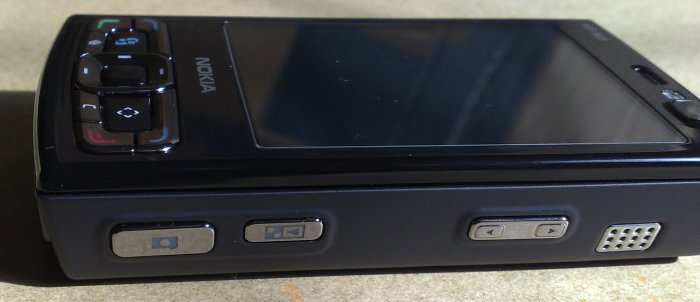
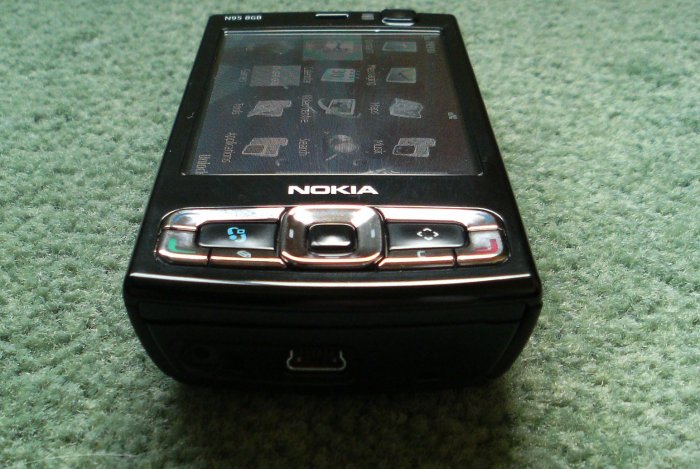
Boasting up to eight gigabytes of built-in memory, the Nokia N95 8GB has all the key features of its predecessor, including a 5 megapixel camera with Carl Zeiss optics, built-in A-GPS, WLAN, HSDPA and an innovative 2-way slide. The sleek black N95 8GB also boasts a luminous 2.8" (240 x 320) QVGA display, so watching videos, browsing the Internet or viewing maps is a real pleasure. With its expanded memory, the N95 8GB offers up to 20 hours of video or up to 6000 songs.

The N95 8GB multimedia computer has an estimated retail price of EUR 560 before taxes or subsidies.

The ideal companion for any lull in your day, the Nokia N95 8GB supports services like Nokia Music Store and N-Gage Games, so you can delve into a world of leisure. Access millions of music tracks from the Nokia Music Store or get a sneak-peak at N-Gage gaming - live later this year. Test out games like FIFA 2007 and Asphalt 3: Street Rules. Once N-Gage goes live, you'll be able to try games for free before deciding on your purchase.

Now with A-GPS, Nokia N95 8GB connoisseurs can whiz to their locations on Nokia Maps faster and enjoy maps for over 150 countries. Explore the world, find specific routes or locate services such as restaurants and hotels, covering more than 15 million points of interest. Purchase additional features, such as city guides and voice guided navigation, is an option too.

Here In india its now avaliable[bangalore @ 35000]and i have seen it and man it looks damn kool and is very lite and fast.One phone u would die to have
المزيد

New Sony Ericsson M610i on Sale At Ebay


Proto of Sony Ericsson M610i on German eBay

The new Sony Ericsson M610i is now on offer on german ebay and is available for €1000.

Reported specs of Sony Ericsson M610i:
GSM 900/1800/1900 MHz, WCDMA (UMTS)
OS - Symbian (UIQ 3.0)
Display - touchscreen240x320 pixels, 262K colors
Onboard memory - 160 MB
Memory Stick Micro (M2) cards
Wi-Fi 802.11b, Bluetooth (A2DP), IrDA
FM-radio with RDS
Dimensions – 106x55x17 mm
Weight - 116 g
المزيد
 

Recommended Product

  • ads
  • ads
  • ads
  • ads
  • ads
  • ads
  • ads
  • ads

How to Order?

My Blog List

ثيمات علي كيف كيفك Copyleft © 2009 Shopping Bag is Designed by Ipietoon Sponsored by Online Business Journal